


In the modern business landscape, a company profile website is not just an option; it’s a necessity. It serves as your company’s official identity and central information hub, typically detailing your history, corporate culture, and a portfolio of completed projects.
Given its strategic importance, a company profile website needs more than just an attractive design. The website must be accessible, fast, secure, informative, and tailored to your specific business needs. This means that every feature should be purposefully chosen to align with your company’s business objectives, not just added for show.
This article provides a detailed breakdown of the features your company profile website should have, covering everything from mandatory components to valuable additions.
Table of Contents
What Are Company Profile Website Features?
Company profile website features are the elements, modules, or functions built into a site to support your business processes. These features aren’t merely for aesthetic appeal; they perform crucial functions.
In general, a company profile website is designed to build a professional image, present company information in a structured manner, and help your audience get to know your business. Beyond facilitating interaction, it can also be a powerful tool for driving conversions.
What Are the Essential Company Profile Website Features?
A professional company profile website must be designed to be secure, fast, and user-friendly. In addition to being aesthetically pleasing, the site must effectively support your business processes.
Here are the mandatory features that every professional company profile website should include:
1. Basic Security Features
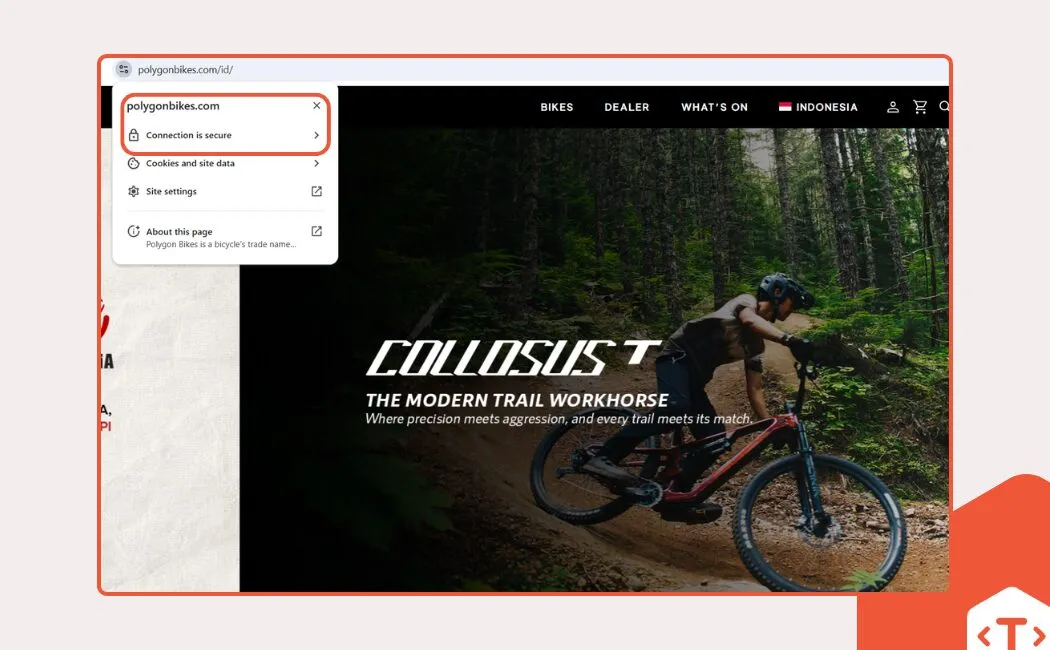
A website that is verified as secure earns the trust of both its audience and search engines. A secure website is identifiable by the padlock icon in the browser bar, which indicates a “Connection is secure.”
Security is the foundation of any website. An insecure site is not only a prime target for hacking but will also suffer from a poor reputation in the eyes of users and search engines. Therefore, security is a non-negotiable feature for a company profile website.
Installing an SSL (Secure Sockets Layer) certificate is a fundamental requirement. SSL encrypts the data transmitted between a visitor’s browser and your server, ensuring that sensitive information like phone numbers and login credentials cannot be easily intercepted.
Beyond security, the padlock icon associated with SSL builds audience trust. Furthermore, websites using HTTPS can receive a ranking boost from search engines.
2. Speed and Performance
A slow-loading company profile website will quickly be abandoned by visitors. Moreover, site speed is a critical factor in SEO ranking. Website performance can be optimized through several methods, including: compressing assets (images, videos, scripts), implementing server and browser caching, optimizing the database, and, just as importantly, choosing a high-quality hosting provider.
3. Responsive Design
The majority of internet users today access a website using their smartphones. This means your company profile website must display and function perfectly across all screen sizes, from desktops and tablets to mobile devices.
A responsive design ensures that content is always easy to read, buttons and menus are clickable, and the layout remains clean and organized. Without it, mobile users will struggle to navigate your site and will likely leave within seconds.
4. Clear Navigation Structure
Another critical basic feature is a clear navigation structure. Navigation acts as the map for your website, and a well-designed menu structure helps visitors understand the flow of your company’s information.
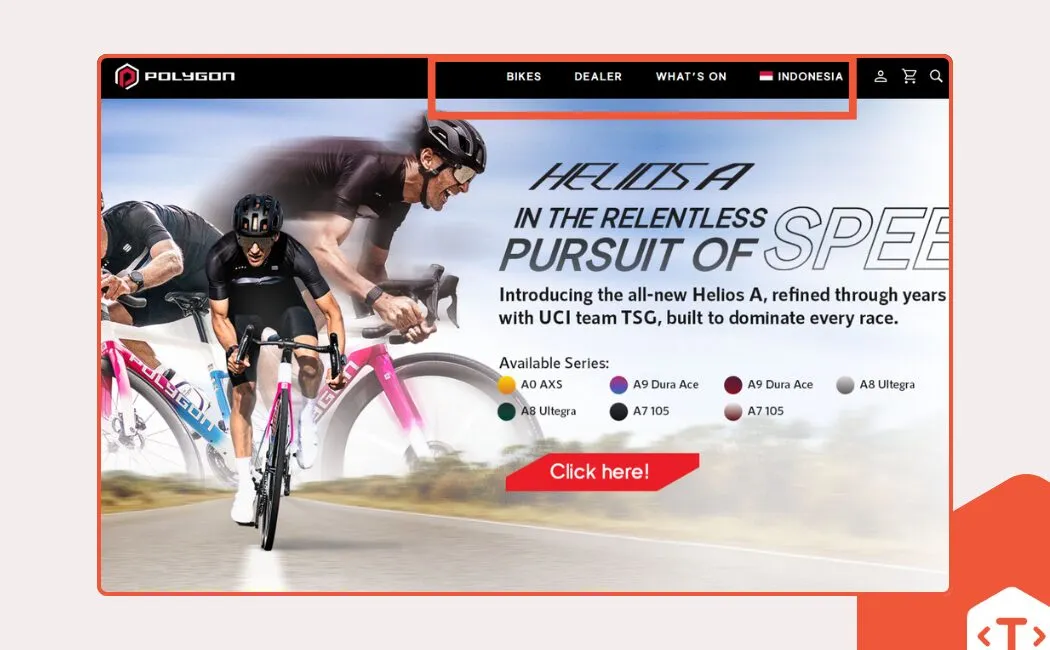
Clean navigation makes it easy for the audience to explore the website. For example, on the company profile website built by Tonjoo, the navigation (highlighted in the red box in the image) helps potential customers easily find the information or products they are looking for.
The main menu should be concise, featuring only essential components like Home, About Us, Products/Services, Portfolio, Case Studies, and Contact. If you have a large amount of content, use sub-menus to break down categories and avoid overwhelming visitors.
5. Content Management System (CMS)
An equally important feature is a robust Content Management System (CMS). A great company profile website isn’t just well-designed on the front-end; it must also be easy to manage on the back-end. This is where a CMS plays a vital role.
If you use a popular CMS like WordPress, the dashboard can be reconfigured to be simpler and more user-friendly. Customizations can include removing unnecessary menus, setting up user roles and permissions, and providing ready-to-use page templates.
For larger companies or those with unique requirements, a custom CMS can be an excellent choice. A custom CMS offers several advantages, such as being tailored to specific business needs, providing a more intuitive admin dashboard, and enabling easier integration with internal systems.
6. Technical On-Page SEO
On-page SEO is a crucial feature for a company profile website. When configured correctly, it helps your site become more discoverable on search engines. Key aspects of on-page SEO to focus on include:
- Meta Titles and Meta Descriptions: Every page and piece of content on your website should have a title and description that are relevant to your target keywords.
- Heading Structure (H1, H2, H3): Content must be organized hierarchically to be easily readable by both your audience and search engines. Use H1, H2, H3, and subsequent headings to structure your pages and content.
- Clean URLs: URLs play a significant role in SEO optimization, so don’t create them haphazardly. A clean URL should ideally contain the target keyword. For example: tonjoo.com/en/website-development-services/.
- Informative and Structured Content: Your content should be written with clear text, concise sentences and paragraphs, and, most importantly, it must satisfy user search intent. It is essential to create informative and well-structured content for every page on your company profile site.
- Images with Alt Text: An often-overlooked yet important aspect of on-page SEO is adding alt text to media. Media content like images and videos should have descriptive alt text to help search engines understand what the media is about.
With solid on-page SEO, your website has a greater chance of appearing in search results when people look for services or solutions relevant to your business.
7. Tracking and Analytics
Another essential feature is tracking and analytics. This functionality allows you to monitor metrics like visitor numbers and most-visited pages. You can also see where your visitors are coming from, such as organic search or paid ads. Tracking can also be used to understand user behavior, including how long visitors stay on your site and what actions they take.
Two powerful tools for tracking and analytics are Google Analytics and Google Search Console. Google Analytics is used to analyze visitor behavior, while Google Search Console is used to track your website’s performance in search engines.
The data collected can then be used to refine your marketing strategy, improve content, and optimize your pages.
Features to Enhance Company Credibility
A good company profile website must convince your audience that your company is competent, experienced, and trustworthy. Here are features that can help boost your company’s credibility:
1. Customer Testimonials
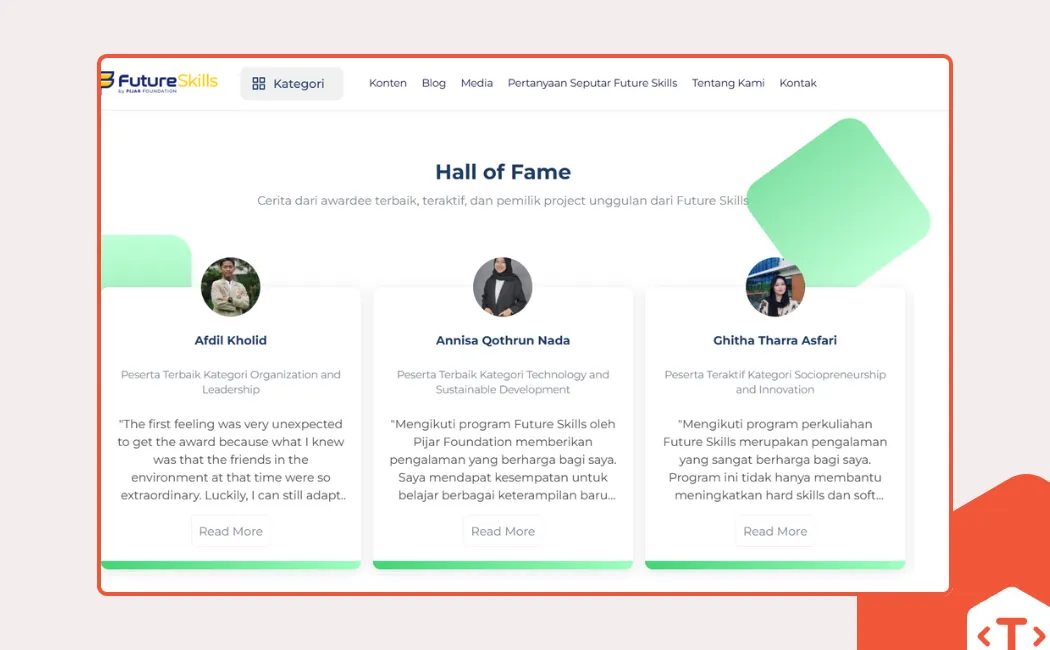
Natural and genuine testimonials can be highly effective in convincing potential customers to use your company’s services.
Testimonials or reviews from past clients serve as powerful proof of your company’s experience and quality. In your testimonials section, if possible, display the client’s name and company logo along with a brief, impactful quote from their review.
2. Case Studies/Portfolio
A portfolio or case study section showcases your past work and achievements. Content can include a brief project description, the solution you provided, and measurable results that were achieved.
Company Profile Website Features for Interaction and Lead Generation
A company profile website should do more than just provide information about your business. Ideally, it should also contribute to generating leads. The following features can help you boost interaction and generate leads:
1. Custom Inquiry Forms
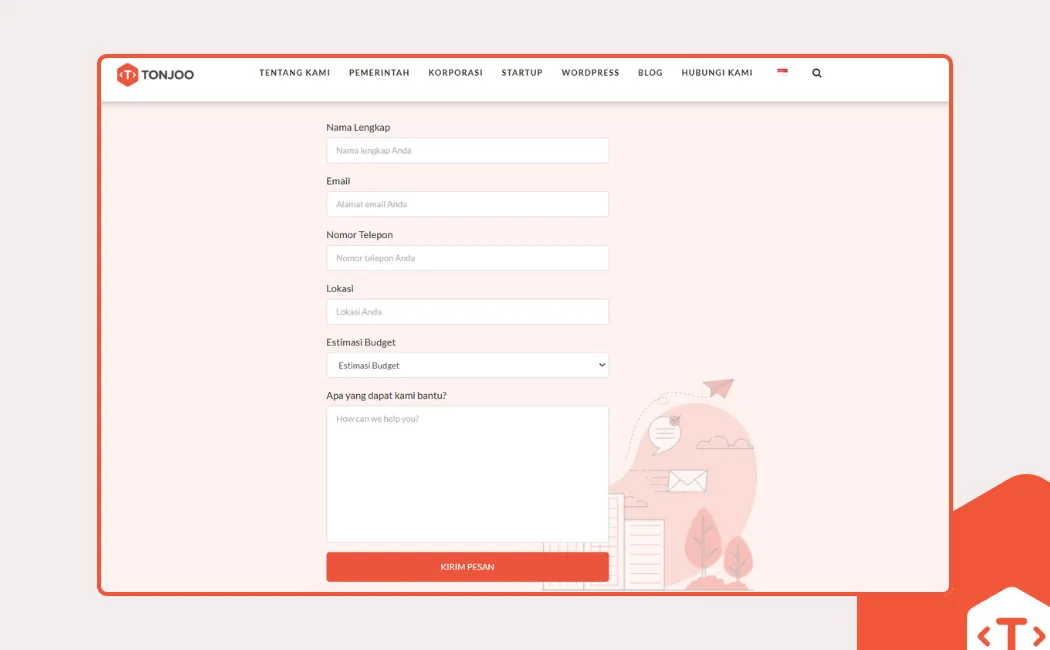
An illustration of a custom inquiry form. From the company’s perspective, this feature helps identify the specific solutions potential clients are looking for.
A customizable contact form is crucial, especially for B2B businesses with complex services. The form can be tailored to include fields such as:
- Type of service
- Budget estimate
- Project timeline
- Potential client information
Data submitted through this form can be automatically routed to your sales team, a Customer Relationship Management (CRM) system, or the admin dashboard for follow-up.
2. WhatsApp Button / WhatsApp API
WhatsApp has become a primary communication standard in many business sectors. Integrating WhatsApp, whether through a simple chat button or the WhatsApp API, can simplify many processes. It allows potential clients to contact you directly, enables your sales team to reach customers, and improves the responsiveness of your customer support.
3. Live Chat/Chatbot
Live chat gives the impression that your company is responsive and ready to help. This feature is highly useful for answering frequently asked questions about services, pricing, or how to contact the sales team.
4. Google Maps Integration
Your company profile website should integrate Google Maps on its contact page. This makes it easy for visitors to find your office location accurately.
This integration is particularly important for companies with physical offices that clients often visit. Additionally, businesses with multiple branches need to integrate their contact pages with Google Maps.
Business Integration Features for Company Profile Site
A company profile website is a vital business asset. It’s therefore important to integrate it with other tools that support your business processes. Here are some business tools you can integrate with your site:
1. CRM Integration

Illustration of CRM integration on a company profile website. With CRM integration, a company can analyze incoming leads, manage follow-ups, and work towards converting them.
Integrating your website with a CRM (Customer Relationship Management) platform allows you to analyze the quality of leads from your website and track the status of lead follow-ups. A CRM platform helps make your business processes more structured and professional.
2. API Integration with Internal Systems
Another key integration is connecting your website to internal systems via an API (Application Programming Interface). Medium-to-large-scale companies often have complex business processes, managing everything from ERP (Enterprise Resource Planning) and inventory/logistics systems to HRIS (Human Resource Information System). Integrating the company profile website’s API with these internal systems is crucial.
With API integration, data traffic can be synchronized automatically between the website and operational systems, reducing the potential for errors caused by manual data entry.
3. Email Marketing Integration
Email marketing remains a highly effective marketing funnel. Therefore, it’s important to integrate your company profile website with an email marketing platform like MailChimp. This integration offers many business benefits, from easily sending promotions and newsletters to customers to building a targeted email database.
Content Management Features in Company Profile Sites
A company profile website becomes more engaging when it includes features for managing content, documents, and corporate branding. These features include:
1. Blog/News Section
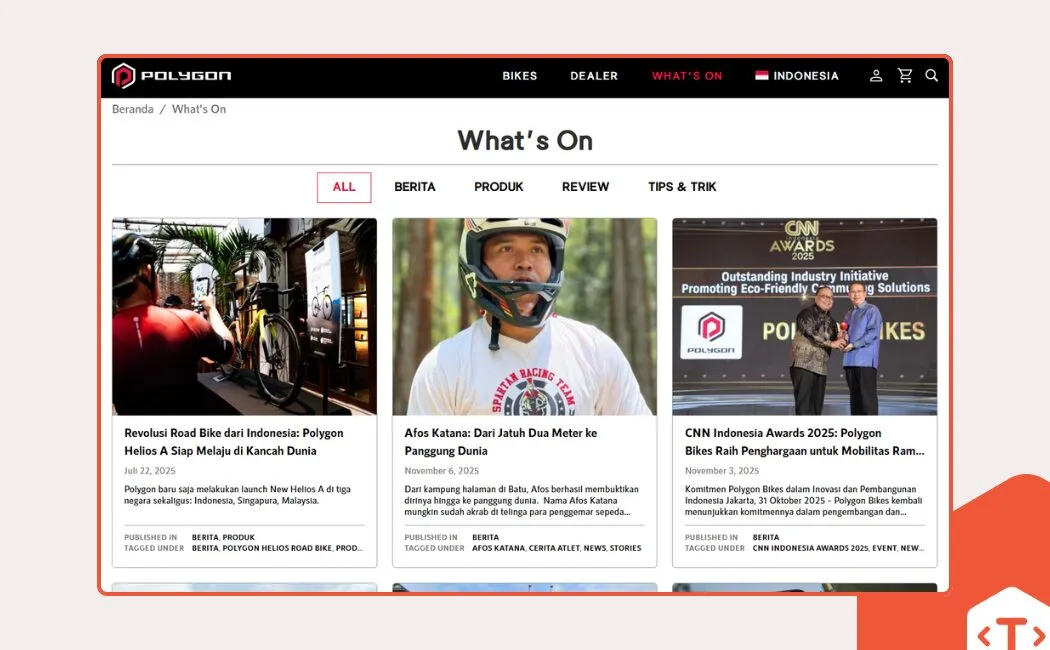
The blog feature on a Tonjoo client’s company profile website. Not only a source of news and information, the blog also serves to build the company’s brand and reputation.
A blog or news section is a common feature on company profile websites. It allows companies to share industry-related articles, announce company news, and simultaneously improve the website’s SEO performance.
2. Custom Corporate Admin Dashboard
An overly complex admin dashboard can often hinder productivity. The solution is to create a custom admin dashboard that, for example, only displays the menus and features that are used most frequently.
This can also involve simplifying the content creation workflow and providing different access levels for admins, editors, and viewers.
3. Document Downloads
A document download feature allows visitors to easily access official company materials. Audiences interested in your services will often look for company brochures, product catalogs, and other documents. It is therefore important to include a document download feature on your site.
Additional Features for a More Professional Website
In addition to the core features above, here are a few extra touches that can make your company profile website appear even more professional:
1. Multi-language Support

The multi-language feature (white arrow) allows the website to be enjoyed by audiences from abroad who want to find information in English.
If your company targets international markets or serves clients from various countries, a multi-language feature becomes essential. Ensure that translations are done professionally, the language selector is easy to find (e.g., in the header), and the content for each language is consistent and easy to manage from the dashboard.
2. Advanced Security Features
Beyond basic security, larger companies or those handling sensitive data should consider advanced security measures. These can include a Web Application Firewall (WAF), brute-force protection to limit failed login attempts, and activity monitoring and logging in the admin dashboard.
Security can also be strengthened with regular automated backups that have a clear restoration procedure, plus a server configuration that adheres to industry security standards. These measures help minimize the risk of data breaches and operational disruptions to your company profile website.
Have You Decided on the Features for Your Company Profile Website?
These are the essential features that a high-quality company profile website should possess. Building a professional site requires a combination of business strategy, careful planning, and expert technical execution. As an experienced website development agency, Tonjoo has developed numerous company profile websites with custom features and designs tailored to each company’s character and business goals.
If you’re looking to create a company profile website with a professional appearance, optimal performance, and features that truly support your business needs, let’s have a conversation with Tonjoo. We are ready to help you design and build the company profile website that aligns perfectly with your business needs.

Read similar articles by Moch. Nasikhun Amin on the Tonjoo blog about WordPress, WooCommerce, plugins, and other web development topics.
Updated on January 25, 2026 by Moch. Nasikhun Amin