

An automotive dealership website is more than just a platform for displaying vehicles. It should also help prospective customers explore products, compare specifications, find dealership information, and contact customer service to book vehicle maintenance and repair services.
For automotive companies with extensive dealership networks and diverse service offerings, these requirements could be more complex. Managing vehicle catalogs, branch information, test drive requests, service bookings, and integrations with operational systems requires a platform designed around the company’s business requirements.
Tonjoo provides WordPress website development services for automotive dealerships and businesses, customized to reflect brand identity, customer expectations, and business processes. From company profiles and vehicle catalogs to custom features and system integrations, we develop every aspect of the website to match the project’s scope and requirements.
How Websites Support Automotive Dealerships
A website gives automotive companies a dedicated platform to present product and service information while encouraging visitors to engage with the business and find solutions that meet their requirements.
Here are several business requirements that an automotive dealership website can support.
1. Presenting Vehicle Catalogs in a Structured Format
Prospective customers usually need clear and reliable information before purchasing a car or other products. That’s why a car dealership website plays an important role in showcasing catalogs of cars, motorcycles, and commercial vehicles, complete with photos, specifications, series, and other relevant information.
The catalog structure should also accommodate different vehicle categories, brands, models, and customer search preferences. In that way, visitors can find suitable vehicles without searching across multiple channels.
2. Expanding Dealership Marketing Reach
A website provides easy access to dealership information, including showroom locations and operating hours. This helps customers explore available products, promo offers, and quickly locate nearby branches.
In addition, website content and page structures can be developed with SEO requirements to increase the visibility of product and service information in search engines and make it easier for customers to find.
3. Making It Easier for Customers to Contact Sales Teams
Customer interest in a vehicle should be supported by clear communication that addresses their questions and concerns. A website can support this by providing inquiry forms, service booking options, WhatsApp contact channels, and test-drive scheduling.
These features help visitors to contact the sales team or their nearest dealership.
4. Centralizing Dealership Product & Service Information
Automotive dealerships do more than sell vehicles. Some companies also provide after-sales services, including routine maintenance, repairs, spare parts, and fleet management.
A website can serve as a central information hub for such offerings. Companies can organize website pages so that each service category has relevant information, good communication channels, and defined conversion goals.
5. Supporting Dealership Operations
For automotive companies with multiple branches or corporate customers, a website can support specific operational processes. Examples include vehicle data management, vehicle monitoring, order tracking, and integration with internal company systems. Obviously, these requirements can be reviewed to determine the most appropriate features and development architecture.
Automotive Dealership Website Features
Every automotive company has different functional requirements depending on its vehicle types, business scale, dealership network, and service operations.
Tonjoo can develop custom WordPress features to accommodate these requirements. Below are several features to consider when developing an automotive dealership website:
- Vehicle Catalog and Details
- Dealer Locator and Branch Information
- Dashboard and Operational Systems
- Service Booking and Other Services
- Test Drive Booking and Sales Consultation
- Promotions and Vehicle Offers
You can explore these automotive dealership website features in greater detail. Each feature can be developed or customized to match your brand identity, business characteristics, and objectives.
Automotive Dealership Website Development by Tonjoo
Automotive website development requires an understanding of both brand identity and business operations. For this reason, dealership websites cannot always rely on standard templates or built-in CMS features.
As a custom website design and development service provider, Tonjoo develops automotive dealership websites with a focus on visual design, page structure, and functionality tailored to each project’s requirements.
Here are some examples of Tonjoo’s projects that can serve as references for developing modern, premium, and professional automotive dealership websites.
1. Transforming a Dealership Website into a Business Operations Platform
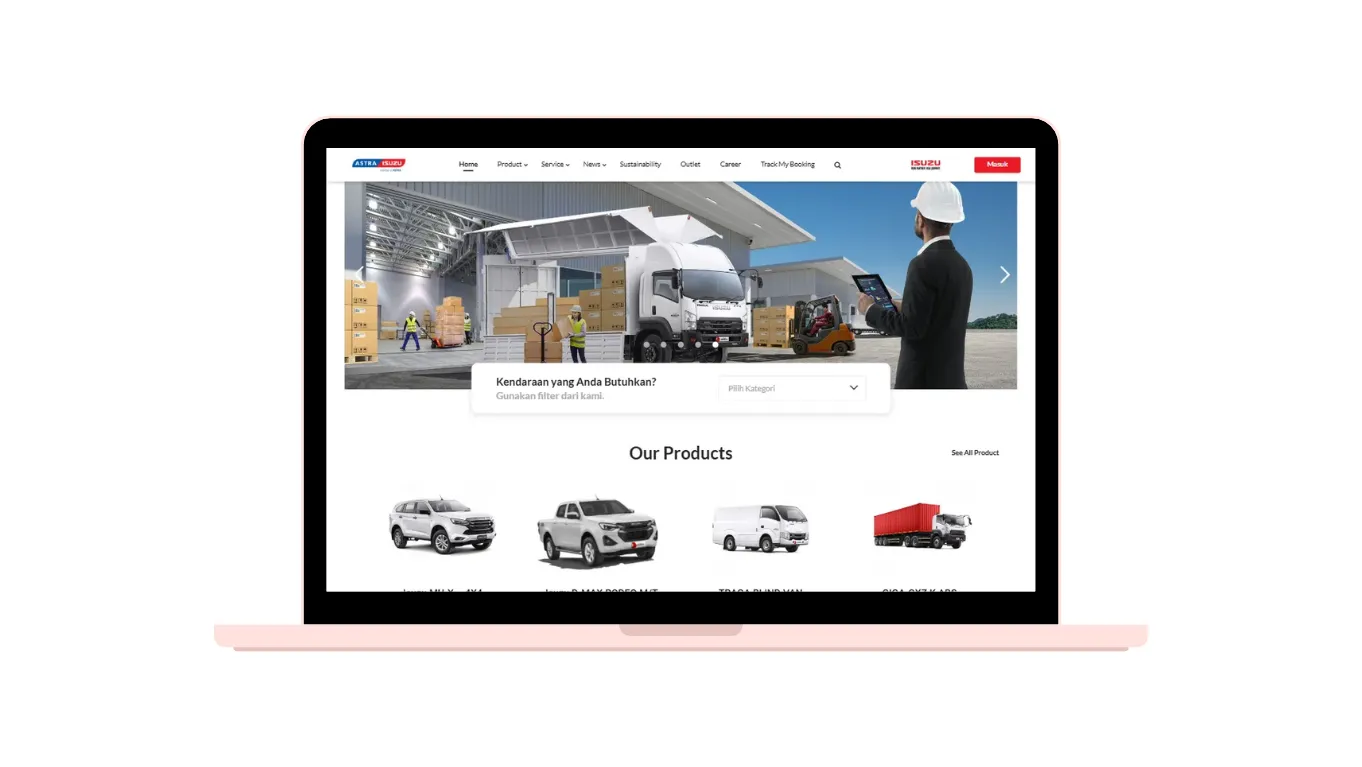
Astra Isuzu’s website initially served as a company profile to introduce the company and its services. As the business requirements evolved, the platform was further developed to support corporate customers, including logistics businesses and fleet owners.
Tonjoo developed several custom features, including Asset Management for adding and monitoring vehicle assets, order status tracking, vehicle tax renewal reminders, and workshop service booking.
The development also involved integration with Astra Isuzu’s existing systems and infrastructure. As a result, the website serves not only as an information platform but also as part of the company’s business operations ecosystem.
2. Developing a Premium Website with Custom WordPress Design
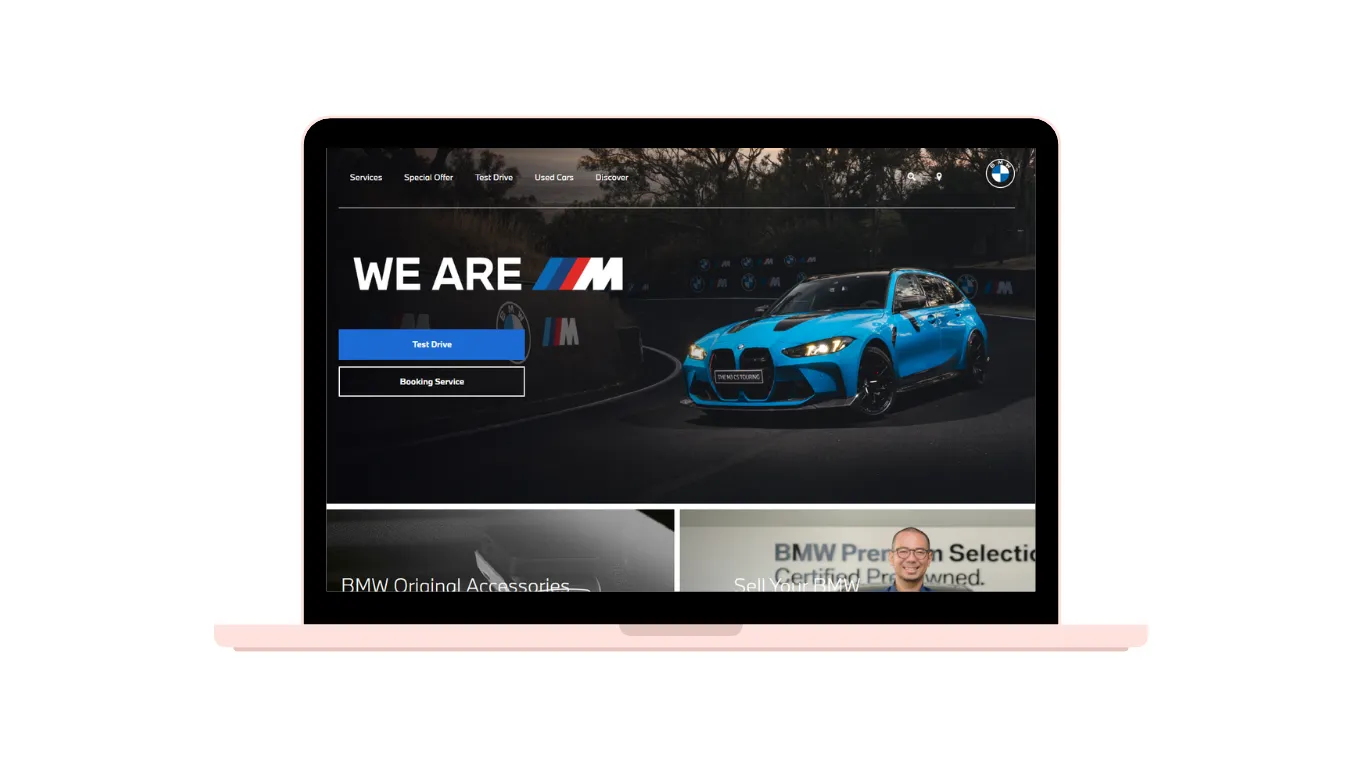
Astra BMW required a digital experience that reflected its premium brand identity and BMW’s global visual standards.
Tonjoo was entrusted with developing a custom WordPress website, from implementing the design direction and developing page layouts to creating animations and structuring the backend.
The development also prioritized performance, navigation, and user experience across different devices. The vehicle model pages, detailed feature information, and CTAs were designed to guide visitors toward submitting test drive requests.
This project successfully demonstrates how website design and functionality can maintain brand consistency while supporting business objectives.
Discuss Your Automotive Dealership Website Requirements with Tonjoo
Every automotive business has different digital requirements and goals. Some companies need a company profile website and vehicle catalog, while others require custom features to support sales, after-sales services, and dealership operations.
Tonjoo is ready to help assess these requirements and develop a WordPress website with designs, features, and integrations that align with your business scope.
Discuss your automotive dealership website development plans with the Tonjoo team to find a solution that supports your company’s requirements and objectives.