

Enhance Website Flexibility with Headless WordPress
Improve Performance, SEO, and User Experience with Next.js and Headless WordPress Integration. Deliver Content Faster with More Modern Content Management.
Why Choose Headless WordPress?
Optimize performance, flexibility, and content management while giving your team full control over frontend and backend development to meet your website's needs.
Responsive Frontend
Next.js powers a responsive and interactive frontend. Content is rendered using Server-Side Rendering (SSR) with data fetched from the Headless WordPress API. Asynchronous requests and caching help optimize data loading.
Flexible CMS
Manage and customize website content through the WordPress dashboard using a page builder or Advanced Custom Fields (ACF), without having to modify code for your team's day-to-day content needs.*
*Excludes highly complex page templates.
SEO Optimization
Manage SEO requirements, including meta tags, Open Graph, sitemaps, content analysis, Google indexing monitoring, and analytics. Your team can optimize content without building SEO features from scratch.
Adaptable Backend
Add and customize fields using ACF without additional development for certain requirements. Changes can be implemented more quickly and flexibly to meet your website's needs.

SPA (Single Page Application)
Built with React.js for faster loading times and seamless transitions between pages, delivering a smoother browsing experience.

Easy to Use
WordPress CMS makes content management easier with an editing interface that reflects the website's final appearance.

Open Source
Built with open-source technologies and supported by publicly available, also accessible documentation.
How Headless WordPress Works
- The frontend and backend are connected through an API, separating the presentation layer from content management.
- API request caching using Redis and Axios Cache helps optimize website performance.
- The frontend uses Next.js with Server-Side Rendering (SSR) to support performance and SEO, helping search engines index the website effectively.
- The CMS backend uses WordPress with a Headless API and runs on a private network that is not directly accessible to the public.
- The architecture is containerized using Docker to simplify maintenance and deployment across different environments.
- Backend access is restricted to the internal network (private network) to enhance security.
Full Features
Content Publication
- Create, edit, and delete page posts
- Create a post or page design
- Determine the main photo
- Adding media to content
- Easy to format content
- Scheduled publication
- Post or page history and revisions
- Content restrictions for public or private
- Password protected posts and pages
- Group posts by category
User Management
- Create, edit, and delete users
- Setting user access rights based on level/tier
- Allows users to register to the website
Media Management
- Upload various types of media to the website
- Uploading is easier with drag and drop
- Upload multiple files in one upload
- Resize images with various size options
- Media management is easier with filters in the media library.
Search Engine Optimized
- WordPress is optimized for search engines
- Use popular and free SEO plugins available
- Customize permalinks to make your website more SEO-friendly
Enhance Your Experience With Plugins
- Add website functionality using plugins from the official WordPress directory or from other developers.
- Easy to activate or deactivate installed plugins
Multi-Language Support
- Enable multilingual support with the Polylang plugin
- Manage multiple languages from a single dashboard
- The WordPress dashboard is available in more than 70 languages
Appearance Customization
- Built-in customizer with live preview
- Set custom logo to website
- Customize text and background colors
- Easy menu setup
- Add content or features to your sidebar with a variety of widgets.
- Set the front page as a static page and recent posts as a static page.
Import & Export Content
- WordPress comes with importers from Blogger, LiveJournal, Movable Type, TypePad, Tumblr, and WordPress.
- Use the export tool to backup all content or move it to a new site.
Headless WordPress Projects with Tonjoo
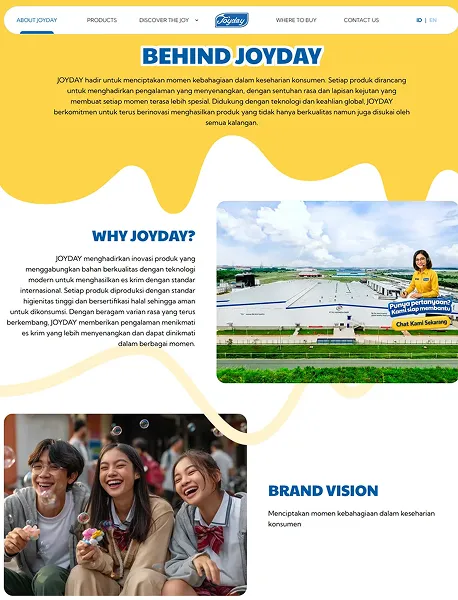
Bringing Joyday’s Fun to Life with Next.js and WordPress
Bring Joyday’s signature fun and surprises to life through a Headless CMS website built on a modern architecture that enhances performance and delivers a faster experience for users.
Ready to Build Your Website with a Modern Headless Architecture?
Combining WordPress and Next.js delivers speed, flexibility, and easier content management that a single platform cannot offer.