


AI has become one of the most popular digital technologies for its powerful ability to generate various types of content, including text, HTML code, images, infographic posters, and even videos.
When creating videos with AI, you also need to write specific prompts and provide clear instructions, much like when creating infographic posters instantly with AI.
Unfortunately, AI video generation cannot be done directly with AI tools like ChatGPT, except for creating the video script. However, you can still create AI-generated videos using Gemini or other AI tools available online, such as VEED, Seedance, and more.
Let’s explore them one by one, starting with the AI tools you can use, how to create videos quickly with AI, and more!
Table of Contents
Some AI Tools for Creating Videos
1. Gemini
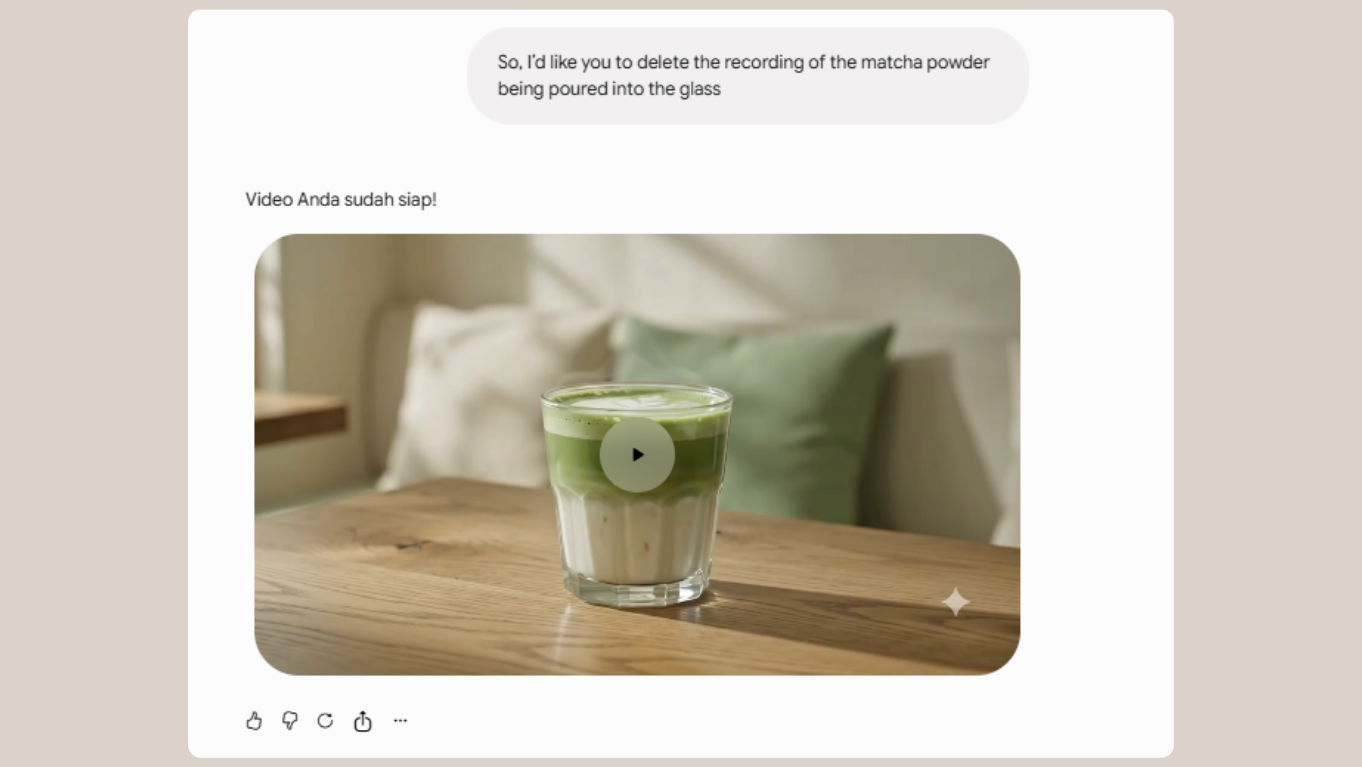
In the past, creating videos with Gemini required a Gemini Pro subscription. Now, users can use the free version, with a limit of up to 10 video generations per day. This means you have 10 chances within a 24-hour period to create videos with Gemini. Once you reach the limit, you’ll need to wait until the next day before you can use the feature again. So, make sure to use your attempts wisely.
Gemini is an AI assistant integrated with Google’s Veo generative video model, allowing users to create various types of short-form video content based on AI prompts or specific instructions.
One of Gemini’s advantages is its ability to turn images into videos (image-to-video). Users simply need to upload an image and ask Gemini to transform it into a video that feels more dynamic and lifelike. You can even add audio and text to the generated video. This makes Gemini a suitable tool for creating short-form content.
2. VEED.IO
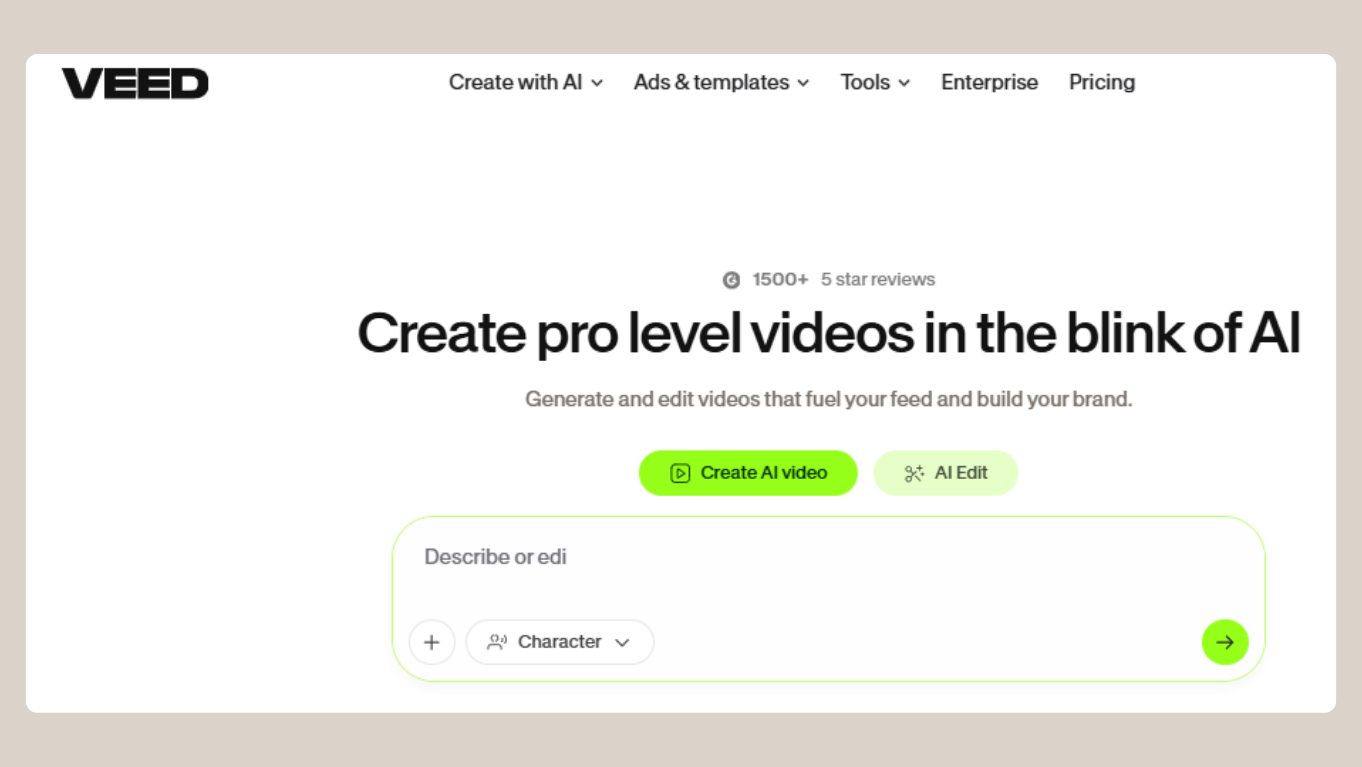
The second AI tool that’s suitable for beginners who want to create videos is VEED.IO. This tool can generate videos from a short prompt or simple instructions, even without requiring a detailed video script.
The VEED.IO AI video generator also offers several video categories that users can create instantly, including ads, promotional videos, tutorials, and certain types of video clips.
Users can also take advantage of various VEED.IO features, such as:
- Editing the text content (video script) that will be converted into voice
- Selecting or replacing video clips
- Adjusting the voice-over by choosing different accents
- Setting the video aspect ratio (portrait, landscape, or square)
- Choosing background music for the video
- Changing the text style
This tool is a great option for beginners who want to learn how to create AI videos quickly and easily, especially since it offers a free plan.
3. Invideo AI
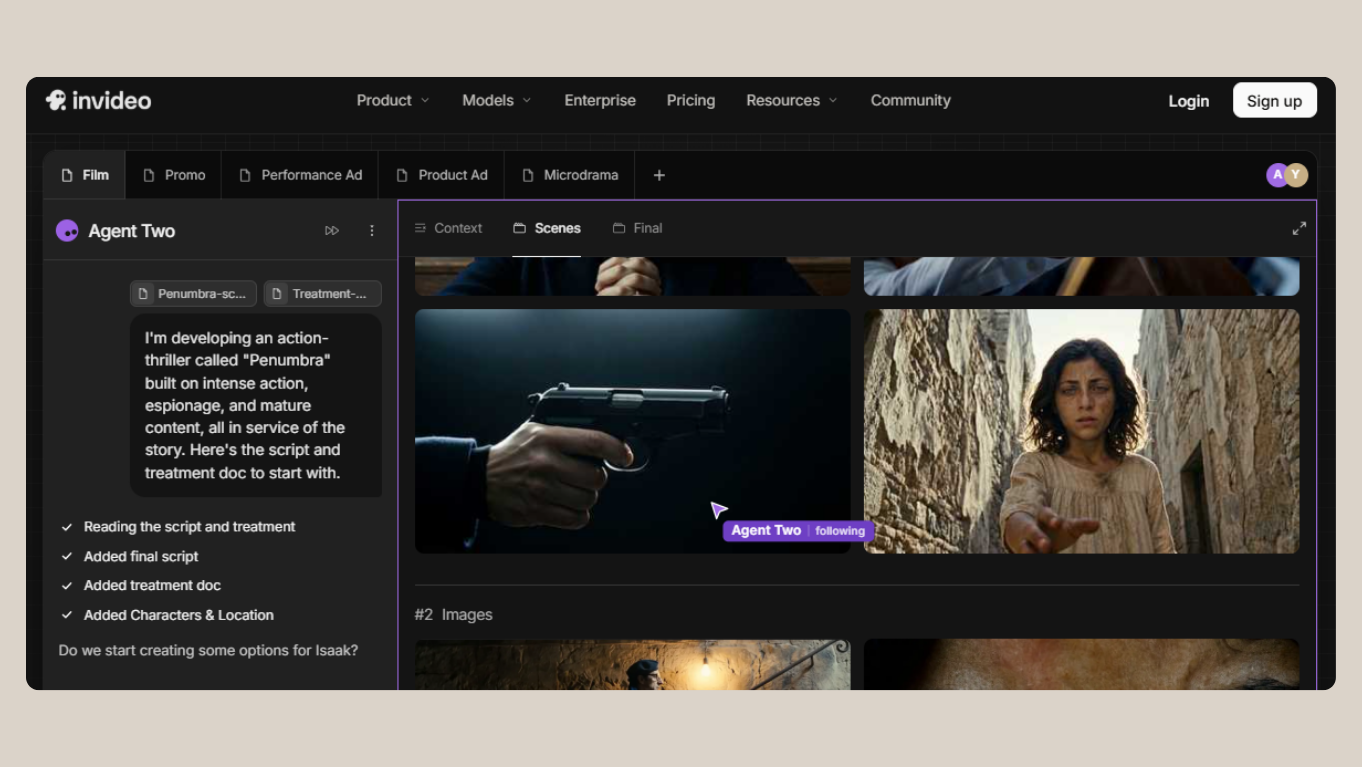
You can also use InVideo to create videos ranging from 45 seconds to 1 minute and 30 seconds, whether you’re making educational, promotional, motivational, or other types of content. However, unlike VEED.IO, which can generate videos relatively quickly, InVideo takes a little longer to process and interpret user prompts.
This is because InVideo’s rendering process analyzes user instructions in greater detail. It starts by analyzing the prompt, generating ideas that can be turned into content based on the user’s preferences, and even recommending the most suitable platform for sharing the finished video.
So, what about the results? InVideo tends to produce realistic-looking video content when users don’t provide detailed instructions. For example, if you don’t specify an art style or the visual style you want the AI to use. This is especially noticeable because InVideo primarily sources its visual assets from platforms such as Storyblocks and iStock.
4. Renderforest
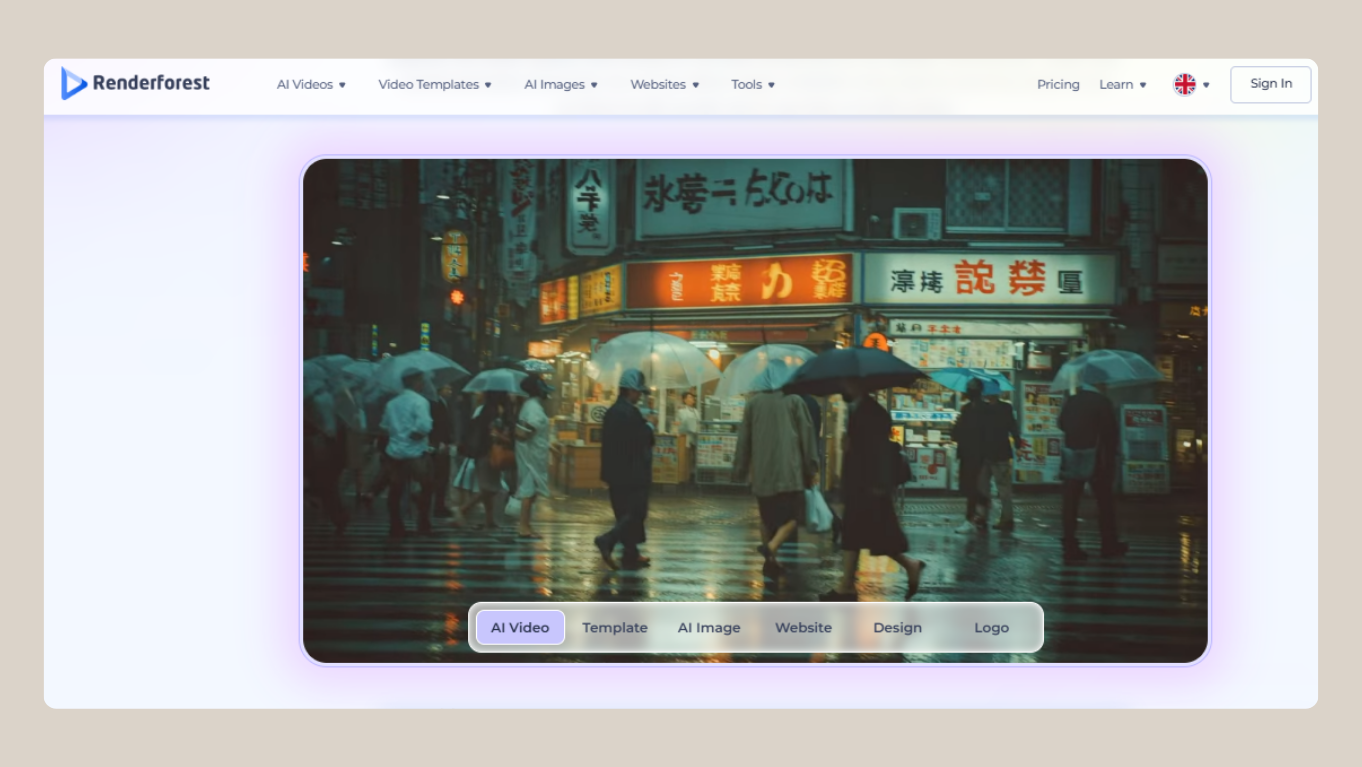
Have you ever used Renderforest to create videos? This AI tool can generate both animated and realistic videos, making it a great option for those who enjoy either style.
What’s more, Renderforest offers a wide range of art styles for both types of videos that you can choose from as the main visual style for your content. For example, you can use 2D animation for business content, 3D animation for educational content, and many other styles depending on the type of content you want to publish. Its UI is also relatively user-friendly, making it suitable for beginners who want to create short videos.
Renderforest works similarly to VEED.IO and InVideo. Users simply need to enter a prompt or instruction based on their needs. However, when using Renderforest, your prompts need to be more specific, much like when you write detailed prompts to get more accurate AI responses.
This is because Renderforest’s AI is still template-based and semi-generative, rather than fully generative like VEED.IO, InVideo, or Sora, which can generate content from scratch based on broader context.
In addition, Renderforest does not yet offer Indonesian-accented voice-overs, so producing videos in Indonesian can still sound somewhat unnatural.
4. VEO 3.1
Google Veo 3.1 is one of the more powerful AI video makers, capable of generating high-quality visuals at resolutions of up to 1080p. This makes it suitable for a wide range of purposes, including promotional content, educational videos, entertainment, and more.
This AI model was developed by Google DeepMind and can accurately direct and synchronize visuals with video.
If you’re looking to create videos with a more cinematic and realistic look, Veo 3.2 could be a great option. It can generate dialogue, sound effects, and ambient sound, while also allowing you to control elements such as lighting, mood, composition, visual style, and object movement through prompts.
How to Write Prompts for AI Video
Writing prompts for AI video production is not much different from using AI as a research tool or generating infographic posters. Even when creating short videos, you only need to write a prompt as a direct instruction. You can then edit the script or text in the video manually or use ChatGPT to refine it further. How does it work? Check out the example and detailed explanation below!
Here’s an example of a prompt for creating a video with Gemini, along with the result:
First, ask ChatGPT to create the prompt in English. For example: “Now create a short prompt for making a video in Gemini. The context is a 10-second animated video showing the Indonesian countryside.”
Second, copy and paste the video prompt generated by AI: “Create a 10-second cinematic animated video of a peaceful Indonesian countryside. Show lush green rice fields, traditional village houses, coconut trees, and distant mountains. The camera slowly moves along a small rural path while the rice plants and trees gently sway in the breeze. Warm morning sunlight, soft natural colors, peaceful and nostalgic atmosphere, beautiful hand-painted animation style.”
Third, wait for Gemini to process the prompt, and your video will be ready.
There you have it. Easy, right?
In addition to creating short animated videos, you can also use Gemini to turn images into videos.
The process is quite similar to the steps above. First, send a prompt to ChatGPT like the one below:
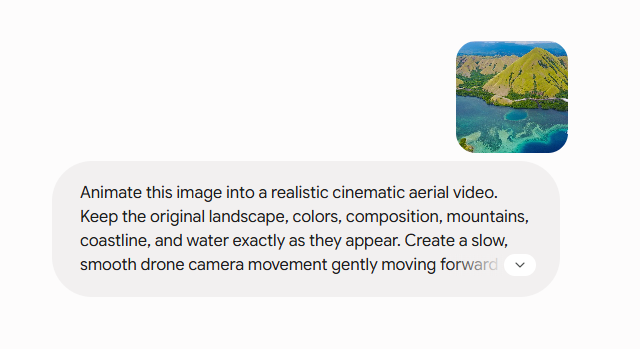
Animate this image into a realistic cinematic aerial video. Keep the original landscape, colors, composition, mountains, coastline, and water exactly as they appear. Create a slow, smooth drone camera movement gently moving forward and slightly upward over the turquoise lake toward the green hills. Add subtle natural movement to the water surface, gentle ripples, and slight movement in the trees and vegetation caused by a soft breeze. Keep the lighting natural and consistent. Preserve the realistic tropical Indonesian landscape and avoid adding or removing any objects. Smooth motion, photorealistic, cinematic aerial footage, stable camera, no distortion, no flickering, 10 seconds.
Second, ChatGPT will then provide a prompt describing the video for Gemini to process.
Third, open Gemini and click Upload File to add the image above. Then, enter the prompt generated by ChatGPT:
And here is the result!
The result is surprisingly close to the original image, and it has now been transformed into a realistic and cinematic short video.
Now you know how to create short videos using Gemini with prompts generated by ChatGPT. For even better results, you can check out how to improve AI prompt results, which Tonjoo covered in a previous article, especially when creating AI videos with sound tailored to your needs.
Updated on August 27, 2026 by Anisa K.