


One of the biggest challenges for organizations with multiple programs and activities is making information easily accessible to their members. When information is distributed across different channels, it can be difficult for members and partners to find what they need.
An organization website can help address this challenge. A website gives organizations a centralized platform to communicate with the public, establish credibility, and support their activities in a more structured way.
So, what makes a professional organization website, and what examples are worth considering? The following examples of organization websites highlight design, layout, and various elements and features worth considering before building a website for your organization.
Table of Contents
What Is an Organization Website?
An organization website is an official digital channel used to share information about an organization’s profile, activities, programs, and services with the public. By providing information in one centralized place, a website makes it easier for members, prospective members, and the general public to find the information they need.
Beyond providing information, an organization’s website can also support various operational and communication needs. Organizations can use it to publish news and event agendas, share activity reports and documentation, accept membership or volunteer applications, and provide donation channels. For this reason, the website structure and features should be aligned with the organization’s goals and characteristics.
Why Do Organizations Need a Website?
A website designed around an organization’s needs can support communication, program promotion, and day-to-day operations. Here are some of the key benefits a website can offer organizations:
1. Central Information Hub
Organizations often manage a wide range of information that needs to be regularly updated, including news, event agendas, programs, publications, and activity documentation. A website can serve as a central hub that brings these different types of information together in one platform, making them easier to find and manage.
2. Build Credibility
A website can serve as an official source of information that helps the public understand an organization’s identity, vision, mission, programs, and activities. Providing complete and well-structured information can also help build trust with prospective members, partners, and other stakeholders.
3. Support Programs and Activities
A website can be developed to support more specific needs, such as membership registration, volunteer applications, event registration, donation campaigns, or program publications. This allows the website to function as more than just an information channel. It can also become part of the organization’s operational processes.
Popular Organization Website Examples for Inspiration
The following organization websites offer useful references for organizations planning to build or improve their own websites. Beyond looking at their visual design, consider how each website manages content, guides visitors, provides services, and supports the organization’s goals.
1. Muhammadiyah
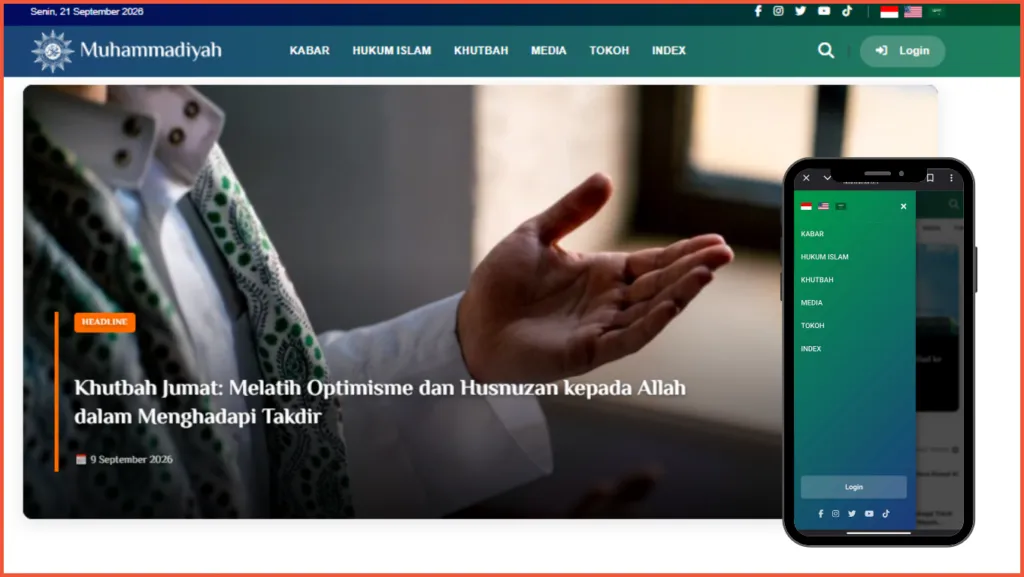
The Muhammadiyah website is an example of an organizational website with a visual style that feels editorial, formal, and contemporary institutional, reflecting the organization’s broad range of activities. As one of Indonesia’s largest Islamic organizations, Muhammadiyah relies heavily on photography, typography, whitespace, content cards, and clear news hierarchies to organize its extensive range of content.
Another notable aspect of the official Muhammadiyah website is its context-based content structure. On the homepage, users can find key sections such as Education, Health, Economy, Humanity, and Others. Meanwhile, more organizational information, such as e-membership card registration, cadre programs, events, and other related services, is placed in the website footer. This content architecture helps keep the main navigation focused while still making supporting organizational information easy to access.
As an Islamic organization that has also established partnerships with organizations in other countries, Muhammadiyah also provides a multilingual feature to make it easier for international audiences to learn more about the organization.
With its extensive membership base, the Muhammadiyah website can also be a good reference for organizations looking to develop a flexible and easy-to-navigate website ecosystem. One example is the integration of services across the organization’s digital ecosystem through Muhammadiyah ID, which allows users, particularly Muhammadiyah members, to access various service applications from a dashboard.
2. Palang Merah Indonesia (Indonesian Red Cross)
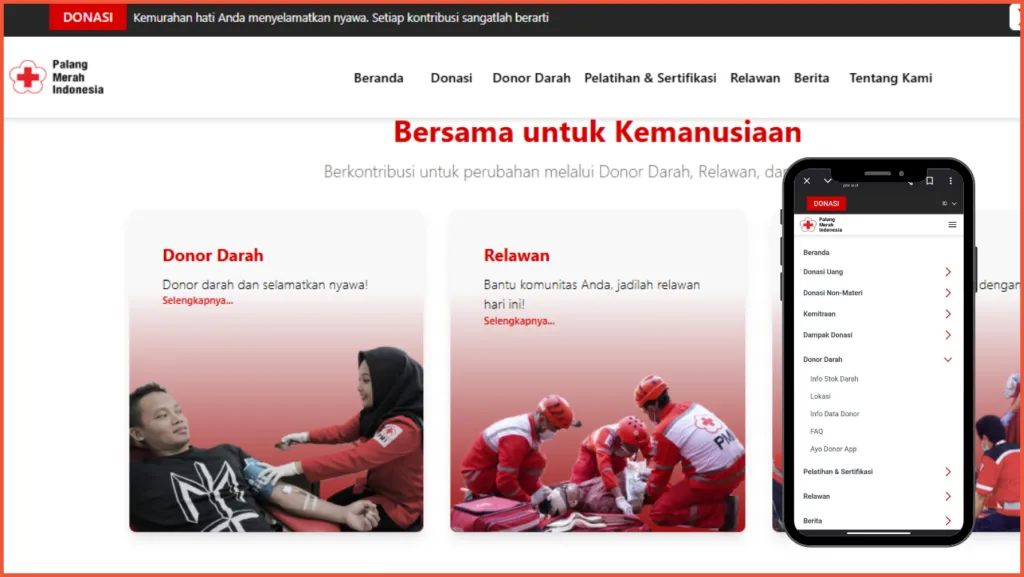
The homepage of the Indonesian Red Cross (PMI) website strongly reflects an institutional service website, with a recognizable identity that is closely associated with its humanitarian work. Its visual elements also reinforce this identity by highlighting various humanitarian activities. The main navigation includes sections such as Donation, Blood Donation, Training & Certification, Volunteers, News, and About Us, giving the website an official and trustworthy feel for visitors looking for information, whether they need immediate assistance or simply want to keep up with the organization’s activities.
At the top of the homepage, visitors can find a slider-based hero section that works as a highlight area, featuring various PMI campaigns and activities as an active humanitarian organization. Unlike the Muhammadiyah website, PMI takes a more service discovery-oriented approach. This can be seen in sections such as Donation, Blood Donation, Training & Certification, and Volunteers, among others. Each section provides detailed information that can be particularly useful for first-time visitors who may not yet be familiar with PMI’s services.
The PMI website also takes an interesting approach from an omnichannel experience perspective. The main website serves as a central access point for organizational information, while more specific needs are directed to dedicated applications or portals. For example, users looking for blood stock information through the Blood Stock Information service are automatically directed to the ayodonor.pmi.or.id portal. This approach creates a more connected digital ecosystem while making it easier for users to access specific services, particularly when browsing from a mobile device while away from home.
The PMI website also demonstrates a service-oriented UX approach. Its purpose is not limited to telling the public who PMI is or what activities it carries out. It also guides users toward taking direct action, whether that means donating blood, finding a blood donation location, making a donation, or accessing specific services and information.
3. WWF Indonesia
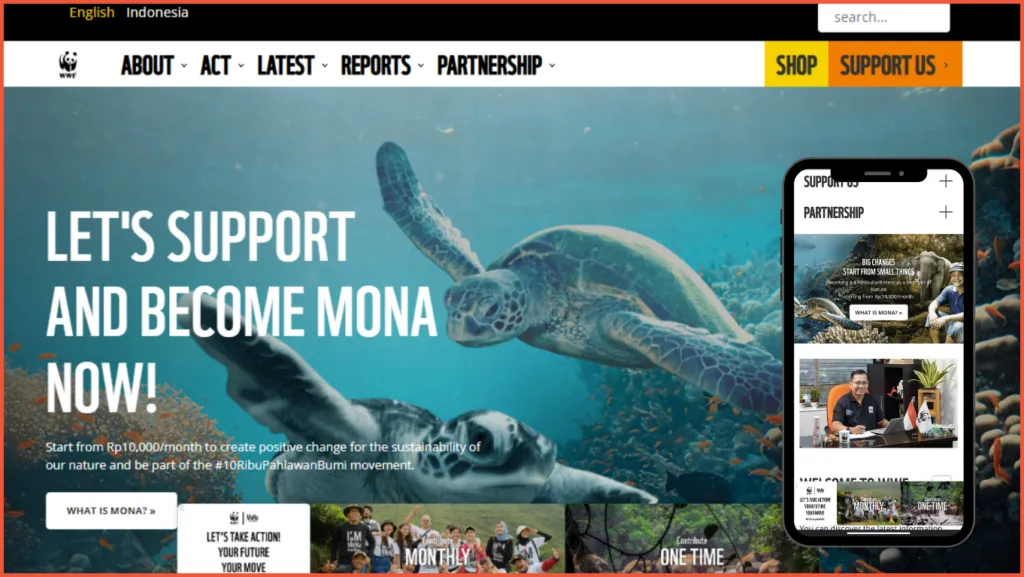
WWF-Indonesia is a strong example of an organization website with a campaign-driven and storytelling-oriented approach. The website uses its headline area as an emotionally engaging campaign space, gradually introducing visitors to the key issues at the heart of WWF-Indonesia’s work. This approach is supported by the fact that each hero section image carries its own message and CTA, allowing different campaigns to take the spotlight while giving visitors a clear action to consider.
The page structure and content organization of the WWF-Indonesia website can serve as a useful reference for organizations that want to use one of the most prominent areas of their homepage to connect the issues they are highlighting with actions visitors can take.
The website’s information architecture also appears to be organized around user intent. The main navigation is divided into sections such as Tentang, Aksi, Terkini, Laporan, and Kemitraan, along with options for supporting WWF. The Aksi section is further divided into campaigns, educational resources, and ways to get involved, including Members of Nature and volunteer opportunities. Meanwhile, Terkini brings together articles, Stories from the Field, publications, and press releases. This type of structure is often designed around what visitors may want to do or explore rather than simply how the organization categorizes its internal information.
Looking more closely, the WWF-Indonesia website is not only designed to tell visitors what the organization does as an independent nature conservation organization. It also aims to turn visitors into potential participants, supporters, or community members by providing clear pathways for them to learn, get involved, and take action.
4. Ikatan Arsitek Indonesia
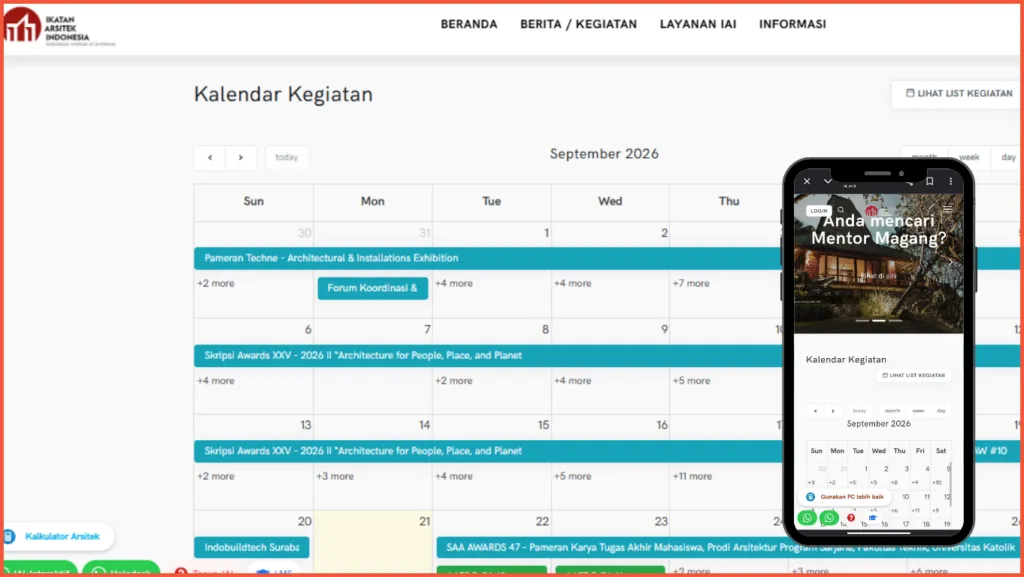
The Ikatan Arsitek Indonesia (IAI) website has a noticeably different character from the three examples above. It feels more like a professional association platform or professional organization website, with a site structure that reflects the organization’s extensive functional and informational needs.
The website serves a relatively complex audience. Its users include not only the general public, but also IAI members, prospective members, professional architects, students, event organizers, and people looking for information about the architecture profession. This is reflected in the IAI sitemap, which includes sections such as Layanan IAI, Informasi, Keanggotaan, Tentang IAI, Berita/Kegiatan, and a member directory.
Visually, the IAI website feels formal, professional, and information-oriented. The homepage prominently features event calendars and news while also providing quick access to several services, including STRA, LOG IAI, the Architect Calculator, and LMS. This approach makes the website not only a source of organizational information, but also an entry point to services used by members and other audiences.
Looking to build a website that functions as a public information layer? The IAI website can be a useful reference for organizations that need to present extensive information while connecting visitors to different services and digital resources.
5. UNICEF Indonesia
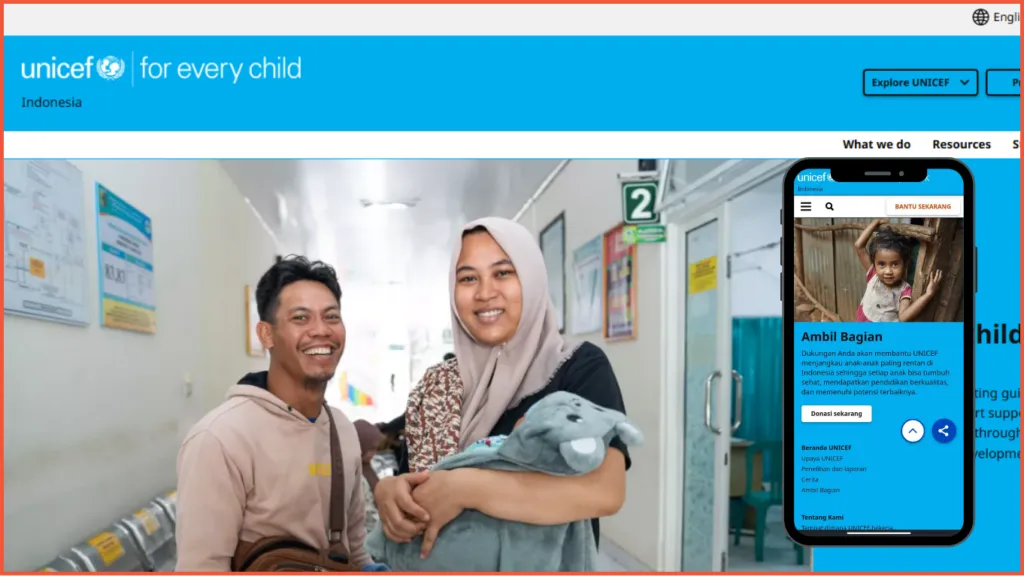
UNICEF is an organization focused on advancing children’s rights and well-being in countries around the world. Its official website therefore takes an impact-driven humanitarian approach, using content, storytelling, data, and various forms of engagement to communicate the impact of its work.
For example, on its What We Do page, UNICEF goes beyond simply listing its areas of focus. The organization explains how it works with governments and partners to support healthcare, education, child protection, nutrition, water and sanitation, and social policy. As a result, the visual elements throughout the website are not simply brand decoration. They help provide context and make the issues being discussed easier to understand.
The UNICEF website also uses a level-of-engagement approach, allowing visitors to engage with the organization in different ways. They can start with relatively low-commitment activities, such as reading articles or reports, and then move toward following specific issues, taking part in campaigns, joining communities, becoming a partner, or making a donation. UNICEF explicitly provides these different pathways through its Take Action section.
For mobile users who primarily access the UNICEF website from their phones, much of the content follows an image, label, headline, short description, CTA pattern. This structure translates naturally into a vertical layout on smaller screens, making content easier to scan and interact with.
For organizations planning to build a humanitarian website that combines storytelling with information, campaigns, engagement, and transparency, the UNICEF website can therefore serve as a strong reference for thinking about how content and user actions can work together within a single digital experience.
6. Lokadaya
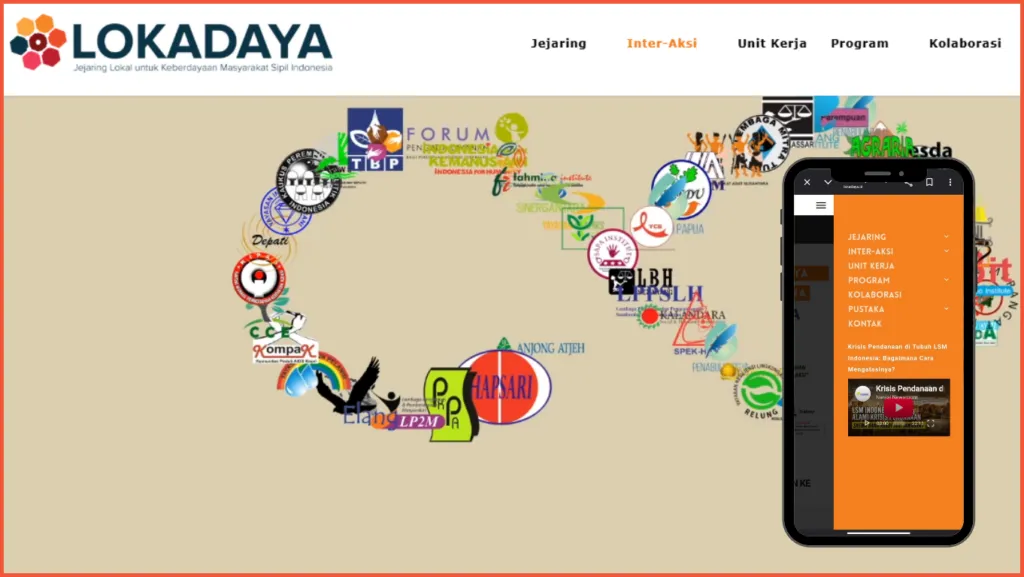
Have you heard of Lokadaya? This open network connects hundreds of civil society organizations (CSOs) working to mobilize and manage domestic resources to empower communities and support more inclusive development in Indonesia.
Its official website, lokadaya.id, was developed and is maintained with support from a European Union grant through the CO-EVOLVE 2 project. Given Lokadaya’s focus on community and organizational activities, its homepage puts strong emphasis on information, data, networks, programs, and connections between organizations. One of its most distinctive elements is the headline area, which serves as the visual focal point and features flowing graphic elements representing different organizations. Together, these elements create a visual representation of the civil society network itself.
This concept aligns closely with Lokadaya’s programs and activities, allowing the website to function as a digital hub for building connections and strengthening the civil society ecosystem.
From a content architecture perspective, the Lokadaya website also emphasizes the ecosystem and relationships between different stakeholders. Its main navigation organizes information into sections such as Jejaring, Inter-Aksi, Unit Kerja, Program, Kolaborasi, Pustaka, and Kontak. The Pustaka section is further divided into Kajian, Referensi, and Materi. This structure reflects how the organization operates while also making the website feel closely aligned with Lokadaya’s own identity and character.
Taken together, the different elements of the website help communicate Lokadaya’s core values of connectivity and discoverability, making it easier for users to explore the organization, its network, programs, and the resources available within its ecosystem.
7. FIFA
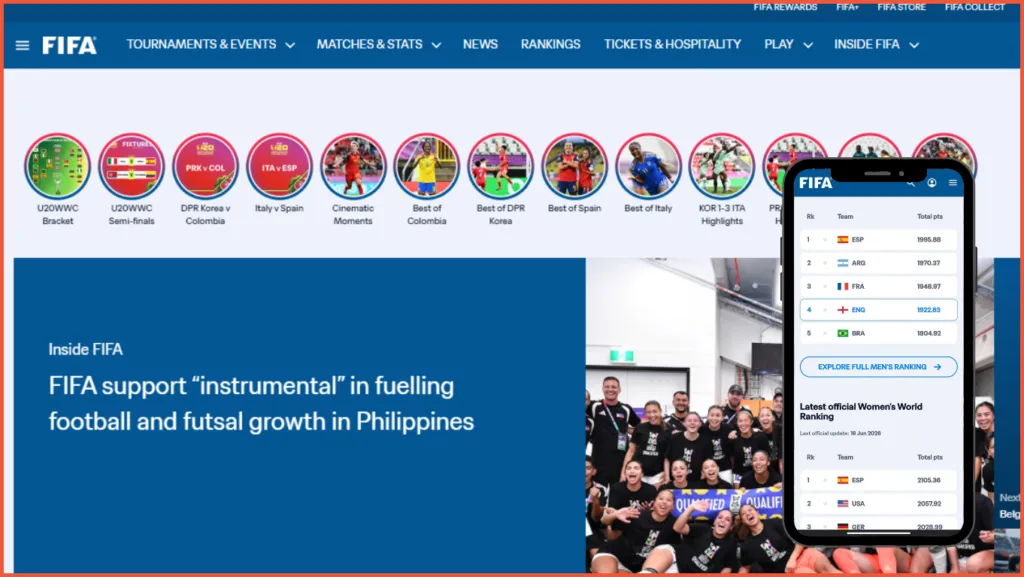
Unlike a conventional organization website, the official website of the world’s governing body for football is an interesting reference because its design clearly represents a global sports platform. From the visual design alone, the FIFA website feels bold, dynamic, editorial, and highly visual. Photography of players and matches, videos, scores, and competition visuals all play a central role in the overall experience.
Another interesting aspect of the FIFA website is how its hero section communicates the organization’s context and purpose, while the homepage also captures the latest moments and developments in football. This makes the FIFA homepage strongly associated with moment-driven content, allowing current events and major football moments to take center stage.
At the same time, FIFA manages a very large volume of content, so its main navigation is organized around different user needs. This gives visitors clearer pathways based on what they are looking for, whether they want to learn about the organization or follow the latest developments in football.
More than that, the FIFA website goes beyond read-only content. It also provides a Match Centre, live scores, team statistics, voting, ticketing, hospitality, fan experiences, video highlights, and various other interactive features. This makes the website more than an information platform and turns it into a broader digital experience for football audiences.
The seven organization website examples above each have their own distinctive characteristics and values that can serve as useful references for planning an organization website. Ready to build a website for your organization?
Organization Websites Developed by Tonjoo
Every organization has different goals and requirements; a website should not follow a one-size-fits-all approach. Tonjoo has experience developing websites for organizations with a wide range of needs and objectives. The following projects offer useful references for understanding how organization websites can be designed around the specific goals, audiences, and requirements of each organization.
Dompe Dhuafa

Dompet Dhuafa is a philanthropic and humanitarian organization that uses its website to introduce its profile, programs, and various services to the public. The Dompet Dhuafa website is one of the projects developed by Tonjoo, with the need to accommodate a wide range of information, programs, and digital services within a single platform.
One of its notable features is the Zakat Calculator, which helps visitors calculate their zakat obligations online. The Dompet Dhuafa website also provides Zakat Pickup and ZISWAF Consultation services, allowing users to access assistance beyond the donation process itself. Visitors can seek guidance before making a zakat payment or choose a service based on their specific needs.
For users who want to make a donation, Dompet Dhuafa provides a dedicated portal where they can select the type and purpose of their donation, enter the amount, provide donor information, and choose a payment method. Available options include e-wallets, virtual accounts, credit cards, and bank transfers. This streamlined flow allows donations to be completed directly through the website without requiring users to switch to another service.
The combination of these services gives the Dompet Dhuafa website a broader role than a conventional organization website. It serves not only as a communication channel for the organization, but also as a platform for delivering services, processing transactions, and supporting donor relationships.
Dewan Masjid Indonesia

Dewan Masjid Indonesia (DMI) is an organization that uses its website as a central source of information about its programs and activities. As part of its development, Tonjoo helped create the DMI website to accommodate the organization’s diverse information needs.
One of its notable sections is the Program menu, which organizes various DMI initiatives around different aspects of mosque development. Visitors can explore programs such as Masjid Bersih & Sehat, Masjid Ramah Jamaah, Lingkungan Hijau, Arsitektur Masjid, Pendidikan & Dakwah, Pengembangan Ekonomi dan Sosial, and Penataan Organisasi dengan Digitalisasi. This structure helps visitors understand DMI’s programs while providing a broader view of the areas of mosque development addressed by the organization.
The website also provides Info Masjid, Informasi Masjid, and Informasi Mubaligh as part of its main navigation. These features extend the website’s role beyond organizational communication by providing information directly relevant to the wider mosque ecosystem.
From a content perspective, DMI manages its website much like an information portal, with several categories including Berita, Program, Artikel, Tausiah, and Hikmah. News articles also include details such as the author, publication date, category, and estimated reading time, making it easier for visitors to discover and navigate the available content.
Ready to Build Your Own Organization Website?
The organization website examples above show that a website can serve a much broader purpose than simply presenting an organization’s profile and information. It can function as a publication hub, an engagement platform, a donation channel, a digital service platform, or even a way to present data and reports to stakeholders.
If your organization needs a professional website that can be adapted to its specific requirements, Tonjoo provides website development services for organizations with features and technologies designed around your organization’s goals and operational needs. Talk to Tonjoo about your organization’s website requirements today.
Updated on September 22, 2026 by Anisa K.
